Ficus Bonsai Topiary Trees for Premium Garden Landscaping
Ficus bonsai and topiary trees are highly attractive ornamental plants used to create distinctive and artistic landscapes. Their dense green foliage, structured trunks and carefully shaped canopies can turn an ordinary garden into a visually striking outdoor environment.
What Are Ficus Topiary Trees?
Ficus trees are popular ornamental plants that can be trained and pruned into a variety of decorative forms. Topiary refers to the practice of shaping plants into specific forms through careful pruning and training.
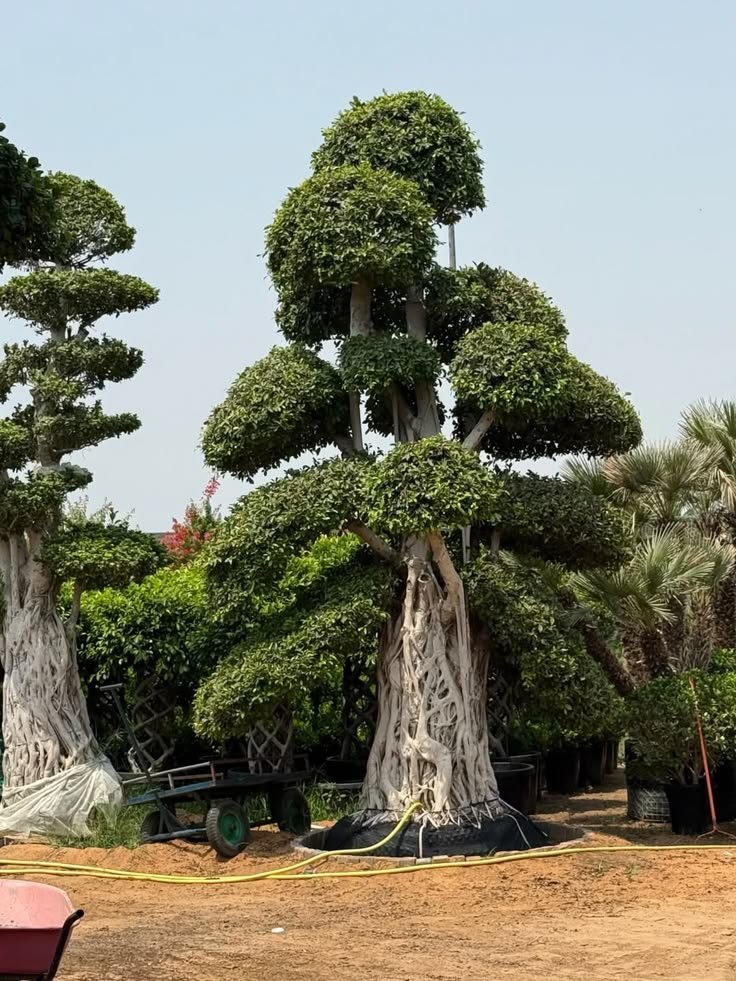
The sculpted Ficus trees shown in the image feature multiple rounded foliage sections arranged at different heights, creating a dramatic architectural appearance.
Ficus Bonsai for Landscaping
Ficus bonsai-style trees can be used as statement plants in gardens, entrances, patios and landscaped properties. Their distinctive shapes provide a strong focal point and can complement both contemporary and traditional landscape designs.
Large specimens can create an especially impressive visual impact when positioned near building entrances, pathways or open garden areas.
Benefits of Ficus Topiary Trees
- Creates an attractive landscape focal point
- Distinctive sculpted and artistic appearance
- Dense green ornamental foliage
- Suitable for premium landscaping projects
- Can be trained into different shapes
- Works well with architectural landscapes
- Suitable for gardens and outdoor spaces
- Available in different sizes and forms
Creative Topiary Tree Shapes
Ficus plants can be shaped into rounded, layered and other artistic forms through regular pruning and training. Multiple foliage levels can create a sculptural effect that adds height and visual interest to a landscape.
The final shape depends on the tree's growth pattern, age, training history and ongoing maintenance.
Ficus Trees for Garden Landscaping
Large Ficus specimens can be used as feature trees in landscaped gardens. They can be positioned individually or arranged in groups to create a structured and sophisticated outdoor environment.
Combining sculpted Ficus trees with palms, flowering plants, shrubs and ground covers can create a layered landscape composition.
Topiary Trees for Commercial Properties
Topiary trees are also suitable for hotels, resorts, office campuses, commercial buildings, restaurants and luxury properties. A carefully positioned sculpted tree can enhance an entrance or outdoor space and create a memorable visual feature.
Ficus Topiary for Property Entrances
Entrance landscaping plays an important role in the overall appearance of a property. A large, well-maintained Ficus topiary can be used near gates, driveways, reception areas or building entrances as a statement plantation feature.
The tree can be combined with architectural lighting, decorative planters, paving and other landscape elements to create a coordinated entrance design.
Key Applications of Ficus Topiary
- Luxury residential gardens
- Villa and farmhouse landscaping
- Hotel and resort landscapes
- Office campuses
- Commercial property entrances
- Garden focal points
- Driveway landscaping
- Landscape feature areas
- Large outdoor planters
- Architectural landscaping projects
Maintenance of Ficus Topiary Trees
Regular maintenance is essential for preserving the desired shape of a topiary tree. Pruning and training help maintain the structure of the foliage, while appropriate watering, nutrition and general plant care support healthy growth.
Maintenance requirements can vary according to the Ficus variety, climate, growing conditions and desired shape.
Choosing Ficus Trees for Landscaping
When selecting Ficus trees for a landscape project, factors such as plant size, canopy shape, available space, sunlight and long-term maintenance should be considered.
Large specimen trees can provide an immediate visual impact, while younger plants offer greater flexibility for developing a desired form over time.
Professional Landscape Plantation
Feature trees should be selected and positioned according to the overall landscape plan. Proper spacing and placement help ensure that the mature tree complements surrounding buildings, pathways and other plantation.
Metron World provides customized landscaping and plantation solutions for residential, commercial and hospitality properties, including ornamental and feature-tree installations.
Conclusion
Ficus bonsai and topiary trees offer a unique way to add structure, greenery and artistic character to a landscape. Their sculpted foliage and distinctive forms can create impressive focal points in gardens, entrances and commercial outdoor spaces.
With suitable selection, professional plantation and regular maintenance, Ficus topiary trees can become a long-lasting feature of a premium landscape design.
Metron World offers customized landscaping and plantation solutions designed to create attractive, structured and visually distinctive outdoor environments.